For research use only · Not for human use
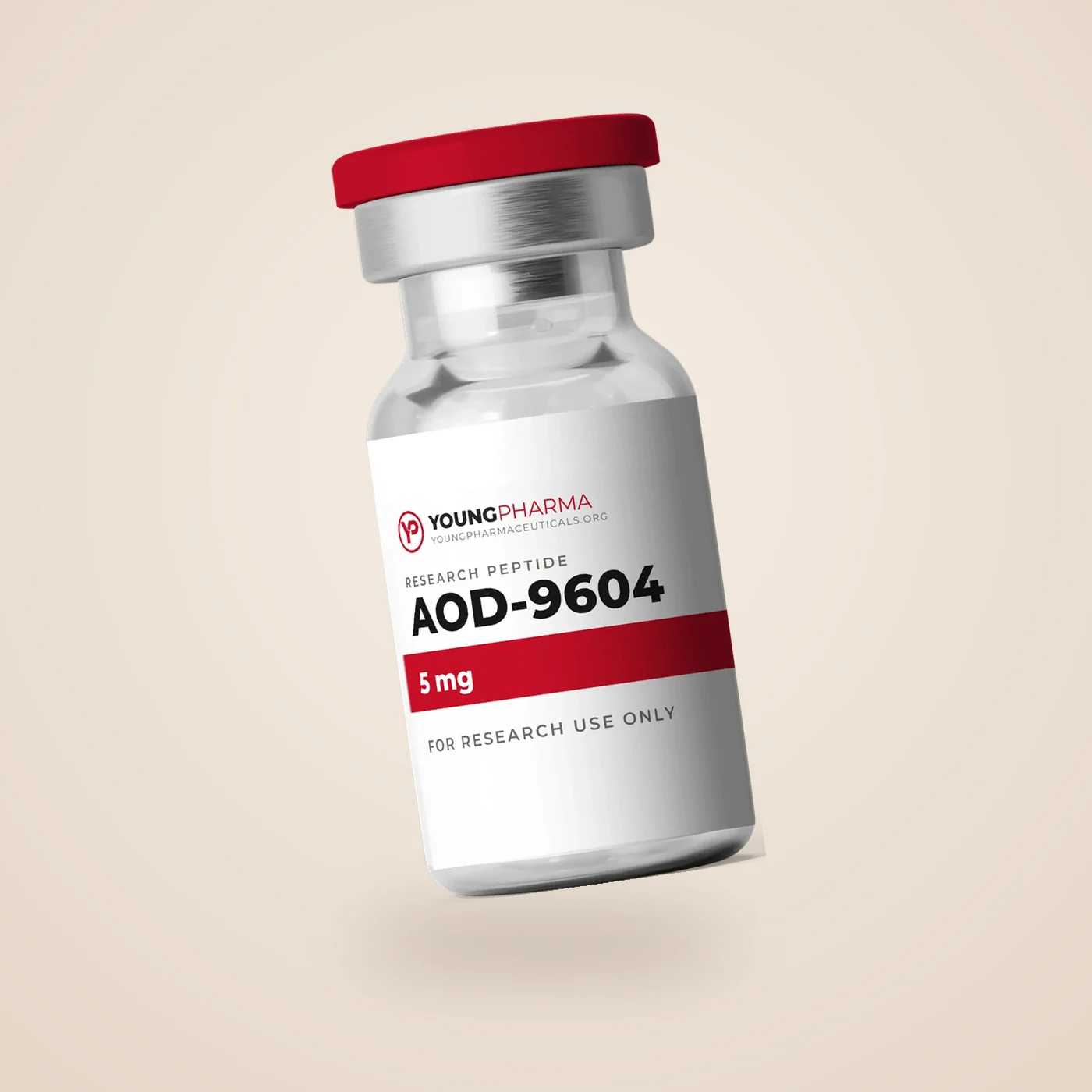
AOD-9604
Growth-hormone fragment for fat-metabolism research
In short
AOD-9604 is a peptide derived from the 176–191 region of growth hormone, which is associated with fat metabolism. It was developed to study fat metabolism without growth hormone's other effects.
Evidence level: Human clinical trialsIt was studied in human clinical trials, which did not show a significant weight-loss effect.
Size
- Independently tested. Janoshik Analytical results published.
- QR verification. An authenticity code on every box.
Chemistry
| CAS# | Formula | Molar mass |
|---|---|---|
| 221231-10-3 | C78H123N23O23S2 | 1815.08 g/mol |
The current batch certificate for this product is not yet published on the site. Send us your lot number and we'll share it.
Request certificateWhat is AOD-9604?
AOD-9604 is a synthetic fragment of the C-terminus of human growth hormone (HGH), corresponding to amino acids 176–191. It has been examined in preclinical models for interactions with lipolytic signaling pathways distinct from the glycemic and growth-promoting pathways associated with full-length HGH.
AOD-9604 was developed in the late 1990s at Monash University in Australia. Researchers there were investigating whether a fragment of the growth hormone molecule could retain lipolytic signaling activity in adipocyte models without the glycemic and proliferative effects of the full-length protein.
The team identified that amino acids 176 to 191 of the growth hormone sequence exhibited lipolytic signaling in adipose tissue models without activating insulin or IGF-1-related growth pathways. They designated this fragment AOD-9604.
AOD-9604 has appeared in peer-reviewed preclinical publications examining growth-hormone fragment biology and adipocyte signaling since the early 2000s. This product is intended for research use only.
How should AOD-9604 be stored?
Research peptides are supplied lyophilized (freeze-dried) . Keep sealed vials cool, dry, and protected from light until reconstitution.
After reconstitution, refrigerate prepared solutions and use sterile technique. For general laboratory diluent and handling notes, see lyophilized peptide reconstitution .
Related research compounds
References
- Heffernan MA, et al. The effects of human GH and its lipolytic fragment (AOD9604) on lipid metabolism following chronic treatment in obese mice and u03b23-AR knock-out mice. Endocrinology. 2001;142(12):5182-5189. PMID 11713213
- Ng FM, et al. Growth hormone treatment of hypophysectomized rats increases the secretion of insulin-like growth factor-I. Endocrinology. 2000;141(8):3098-3103. PMID 10965879
- Munro S, et al. AOD9604, a synthetic lipolytic peptide with high receptor binding affinity and in vivo efficacy. International Journal of Obesity. 2006;30(8):1217-1224.
AOD-9604 is available for laboratory research purposes only.