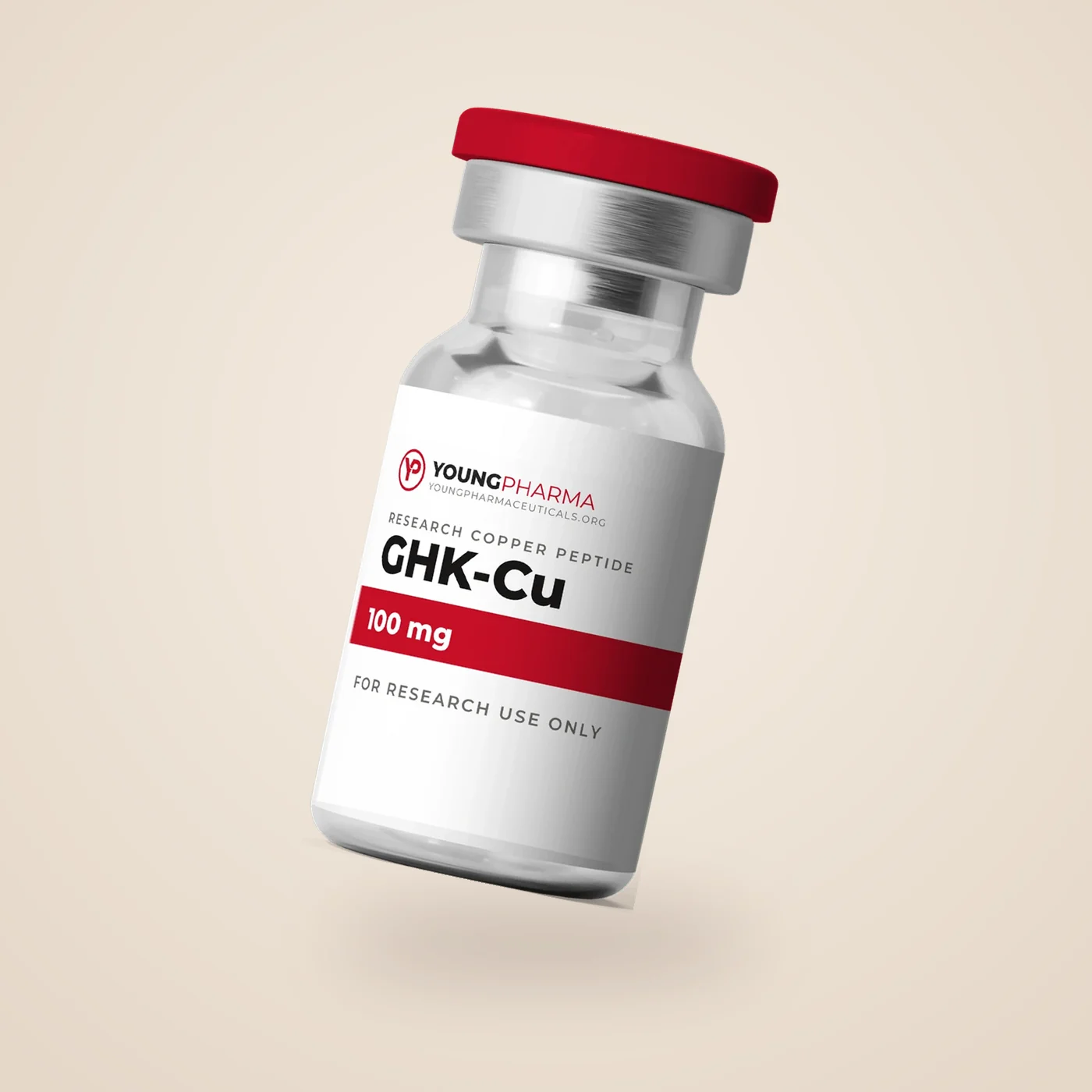
For research use only · Not for human use
GHK-CU
The well-known copper peptide for skin and tissue research
In short
GHK-Cu is a small copper-binding peptide (3 amino acids) that occurs naturally in human blood. It is also a common ingredient in cosmetic products.
Evidence level: Limited human dataHuman data mostly comes from topical/cosmetic studies; data for injected forms is limited.
Size
- Independently tested. Janoshik Analytical results published.
- QR verification. An authenticity code on every box.
Chemistry
| CAS# | Formula | Molar mass |
|---|---|---|
| 49557-75-7 | C14H22CuN6O4 | 401.91 g/mol |
INDEPENDENT LAB ANALYSIS
GHK-Cu 100mg
Every result on this certificate
- GHK-Cu (GHK content) [Copper content]113.69 mg (93.81 mg) [19.88 mg]Reported
- Purity99.703%Reported
- Tests requested
- GHK (or GHK-Cu) analysis
- Ordered / Received / Analyzed
- 16 Jul 2026 / 24 Jul 2026 / 30 Jul 2026
Verify authenticity · Access code
7UMD62KZDQKV
Compare this code with the report on Janoshik's verification page.
Not opening?
Open the link in your browser (Chrome/Safari) or try the alternative address:
janoshik.com/tests/209018-GHKCu_100mg_7UMD62KZDQKVVerify on Janoshik with test #209018 and key:
What is GHK-CU?
A synthetic copper-binding tripeptide (Gly-His-Lys) complexed with copper(II). Has appeared in peer-reviewed preclinical publications examining fibroblast gene expression, copper-dependent enzymatic cofactor activity, and extracellular matrix protein synthesis in cell culture models.
GHK-Cu was first characterized by Dr. Loren Pickart in 1973 while he was studying human blood plasma at the University of Washington. His laboratory work compared biochemical activity between plasma samples from different age cohorts and isolated a small copper-binding peptide that appeared to account for differences observed in the assays.
The peptide was three amino acids long—glycine, histidine, and lysine—bound to a copper ion. Dr. Pickart designated it GHK-Cu. Subsequent observational research reported variation in plasma GHK concentrations, which prompted further laboratory investigation of the molecule.
Over the following decades, published research on GHK-Cu expanded across fibroblast biology, copper-enzyme biochemistry, and gene-expression profiling, with genomic analyses reporting modulation of several thousand genes in cultured cells. GHK-Cu has appeared in peer-reviewed preclinical publications since the 1970s. This product is intended for research use only.
How should GHK-CU be stored?
Research peptides are supplied lyophilized (freeze-dried) . Keep sealed vials cool, dry, and protected from light until reconstitution.
After reconstitution, refrigerate prepared solutions and use sterile technique. For general laboratory diluent and handling notes, see lyophilized peptide reconstitution .
Related research compounds
References
- Pickart L. The human tri-peptide GHK and tissue remodeling. Journal of Biomaterials Science, Polymer Edition. 2008.
- Pickart L, Margolina A. Regenerative and protective actions of the GHK-Cu peptide in the light of the new gene data. International Journal of Molecular Sciences. 2018.
- Pickart L, et al. GHK peptide as a natural modulator of multiple cellular pathways in skin regeneration. BioMed Research International. 2015.
- Pollard JD, et al. Stimulation of collagen production in fibroblast cultures by the tripeptide-copper complex GHK-Cu. Archives of Facial Plastic Surgery. 2005.
GHK-CU is available for laboratory research purposes only.