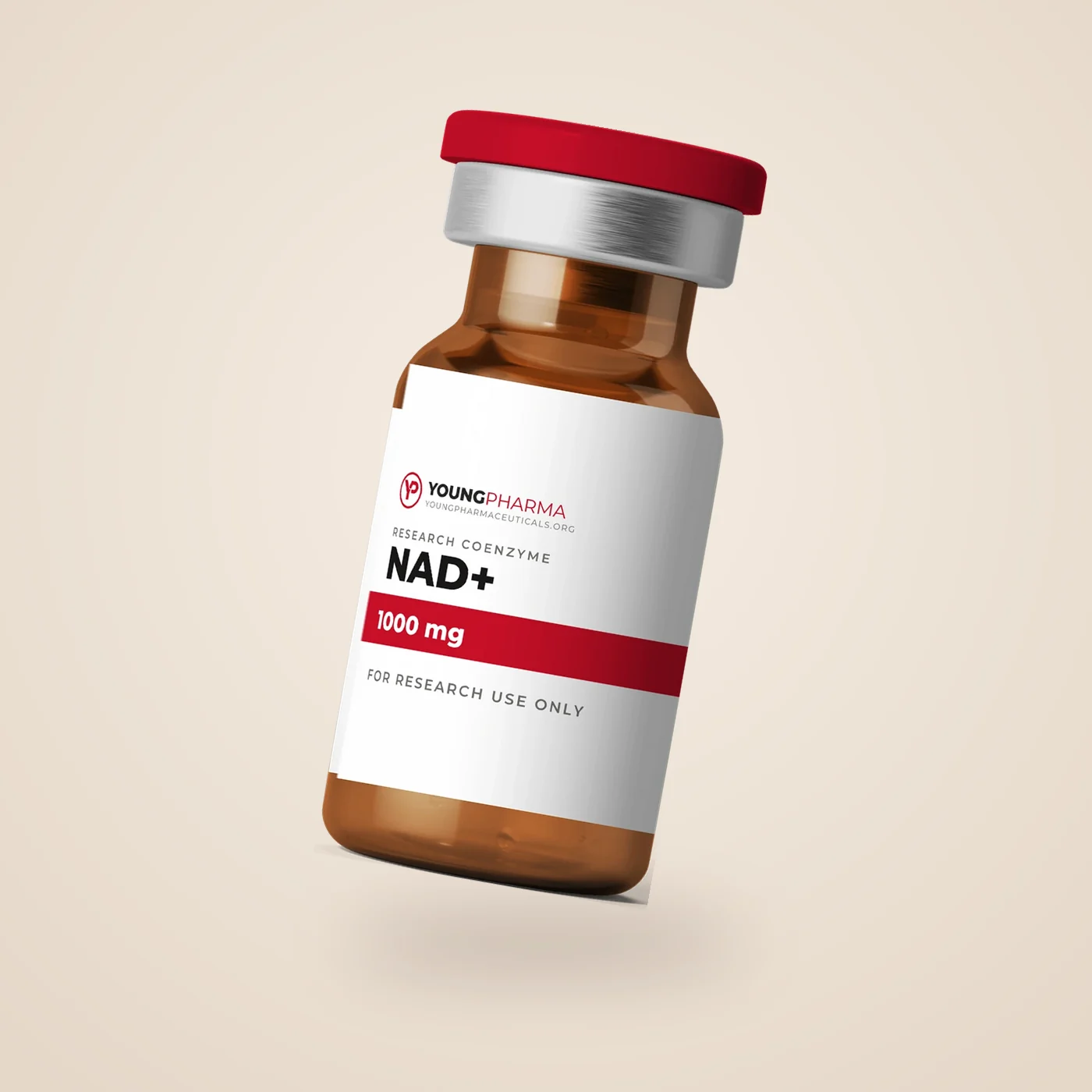
For research use only · Not for human use
NAD+
The coenzyme of cellular energy and aging research
In short
NAD+ is a coenzyme found in every cell and required for energy production. Because its levels decline with age, it is widely studied in aging research.
Evidence level: Limited human dataHuman studies exist but are mostly small and often use precursor forms.
Size
- Independently tested. Janoshik Analytical results published.
- QR verification. An authenticity code on every box.
Chemistry
| CAS# | Formula | Molar mass |
|---|---|---|
| 53-84-9 | C21H27N7O14P2 | 663.4 g/mol |
The current batch certificate for this product is not yet published on the site. Send us your lot number and we'll share it.
Request certificateWhat is NAD+?
NAD+ (Nicotinamide Adenine Dinucleotide) is a coenzyme that has been characterized in biochemical research since the early 1900s. This buffered formulation is supplied in lyophilized form for preclinical research examining NAD+-dependent enzymatic pathways, including sirtuin deacetylation, PARP-mediated reactions, and mitochondrial redox chemistry.
NAD+ was first identified in 1906 by Arthur Harden and William John Young while studying fermentation in yeast extracts. They observed that adding boiled yeast extract to unboiled extract altered the rate of fermentation—the heat-stable factor they characterized was later recognized as NAD+.
The molecule's role in metabolism was elaborated over the following decades. Hans von Euler-Chelpin received the 1929 Nobel Prize for elucidating NAD's structure and function. NAD+ participates in over 500 enzymatic reactions and serves as a cofactor for enzymes that transfer electrons during cellular respiration and related biochemical processes.
In the early 2000s, published research characterized NAD+ as a required substrate for sirtuin enzymes, a family of deacetylases described in multiple model organisms. Subsequent preclinical research has examined age-associated changes in NAD+ levels and the enzymatic pathways that consume and regenerate it. This buffered formulation maintains pH stability for research applications. This product is intended for research use only.
How should NAD+ be stored?
Research peptides are supplied lyophilized (freeze-dried) . Keep sealed vials cool, dry, and protected from light until reconstitution.
After reconstitution, refrigerate prepared solutions and use sterile technique. For general laboratory diluent and handling notes, see lyophilized peptide reconstitution .
Related research compounds
References
- Verdin E. NAD+ in aging, metabolism, and neurodegeneration. Science. 2015;350(6265):1208-1213. PMID 26785480
- Imai S, Guarente L. NAD+ and sirtuins in aging and disease. Trends in Cell Biology. 2014;24(8):464-471. PMID 24786309
- Yoshino J, et al. NAD+ intermediates: The biology and therapeutic potential of NMN and NR. Cell Metabolism. 2018;27(3):513-528. PMID 29249689
NAD+ is available for laboratory research purposes only.